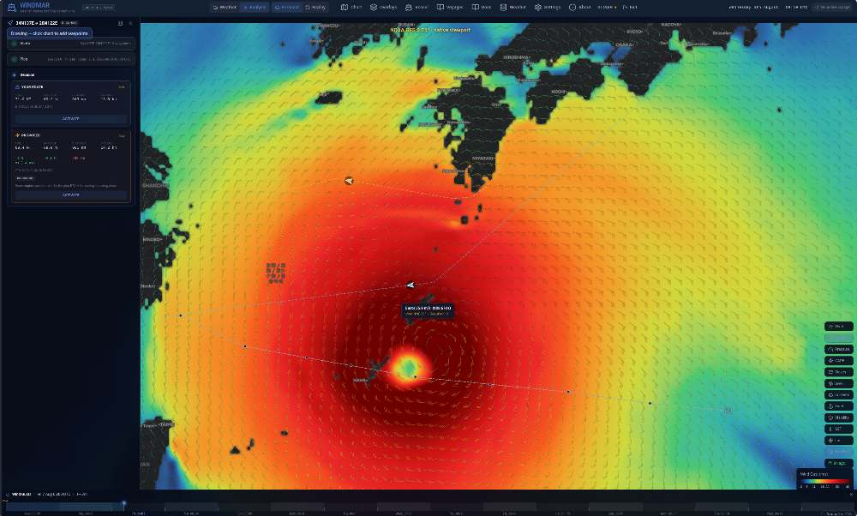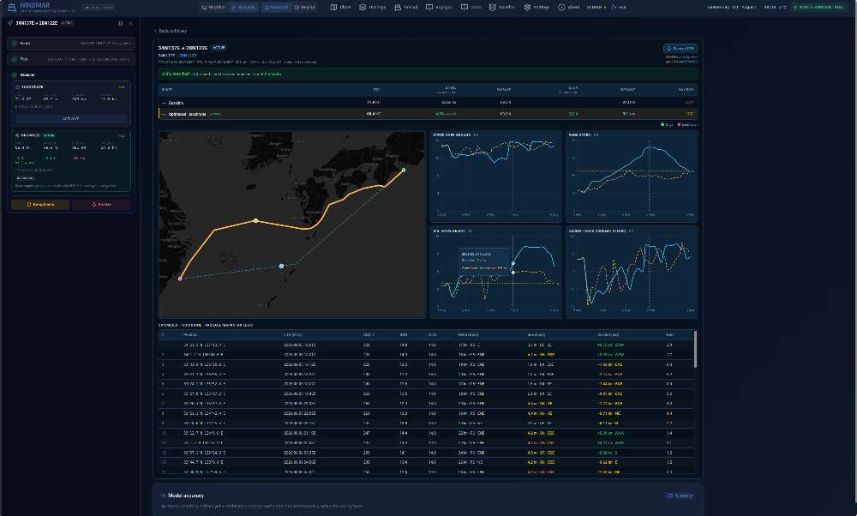
Physics-based ship modelling (Holtrop–Mennen resistance, propulsion chain, SFOC curves), A* pathfinding with safety constraints (wave height, roll, slamming), and Monte Carlo fuel estimation across ECMWF/GFS scenarios producing P10/P50/P90 distributions. Vessel performance analytics: noon-report calibration, voyage replay, and CII compliance reporting.
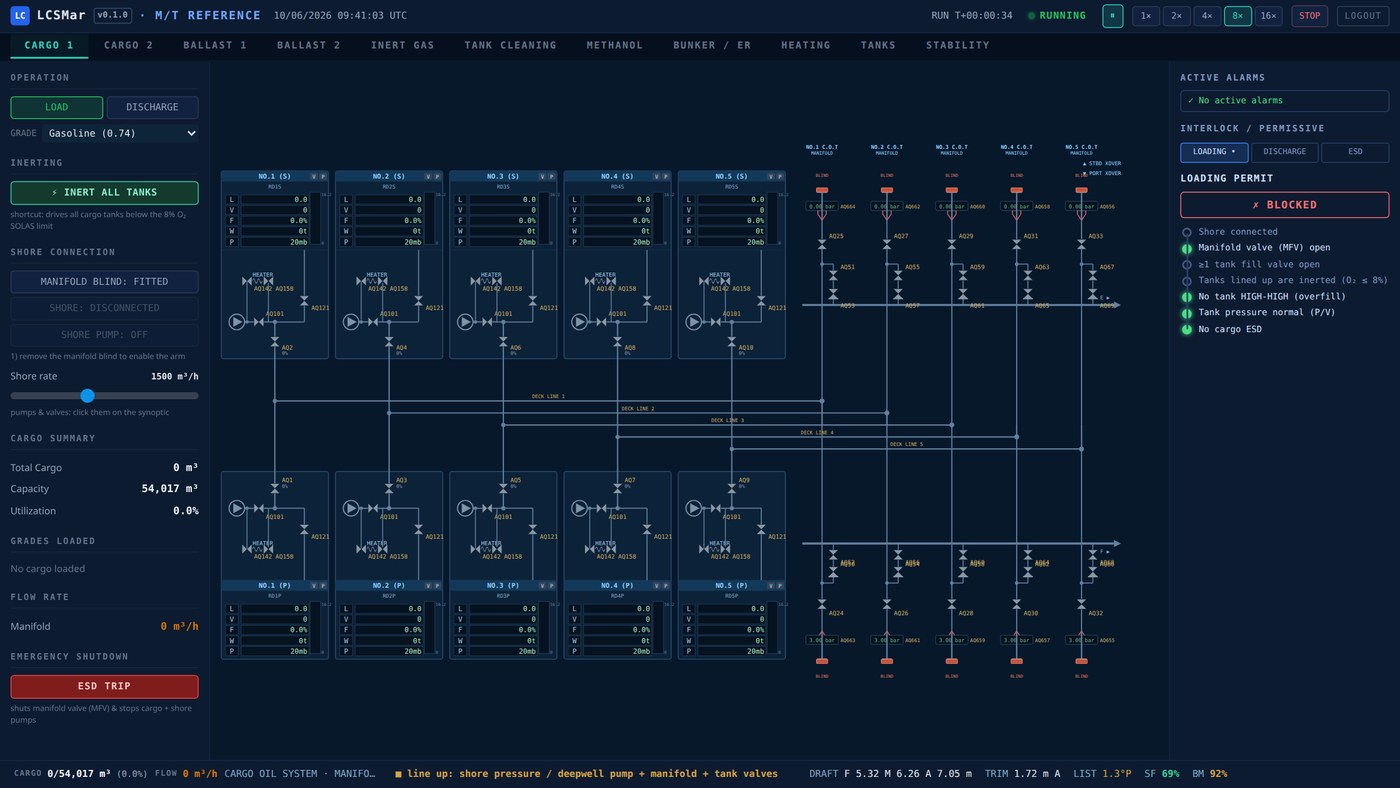
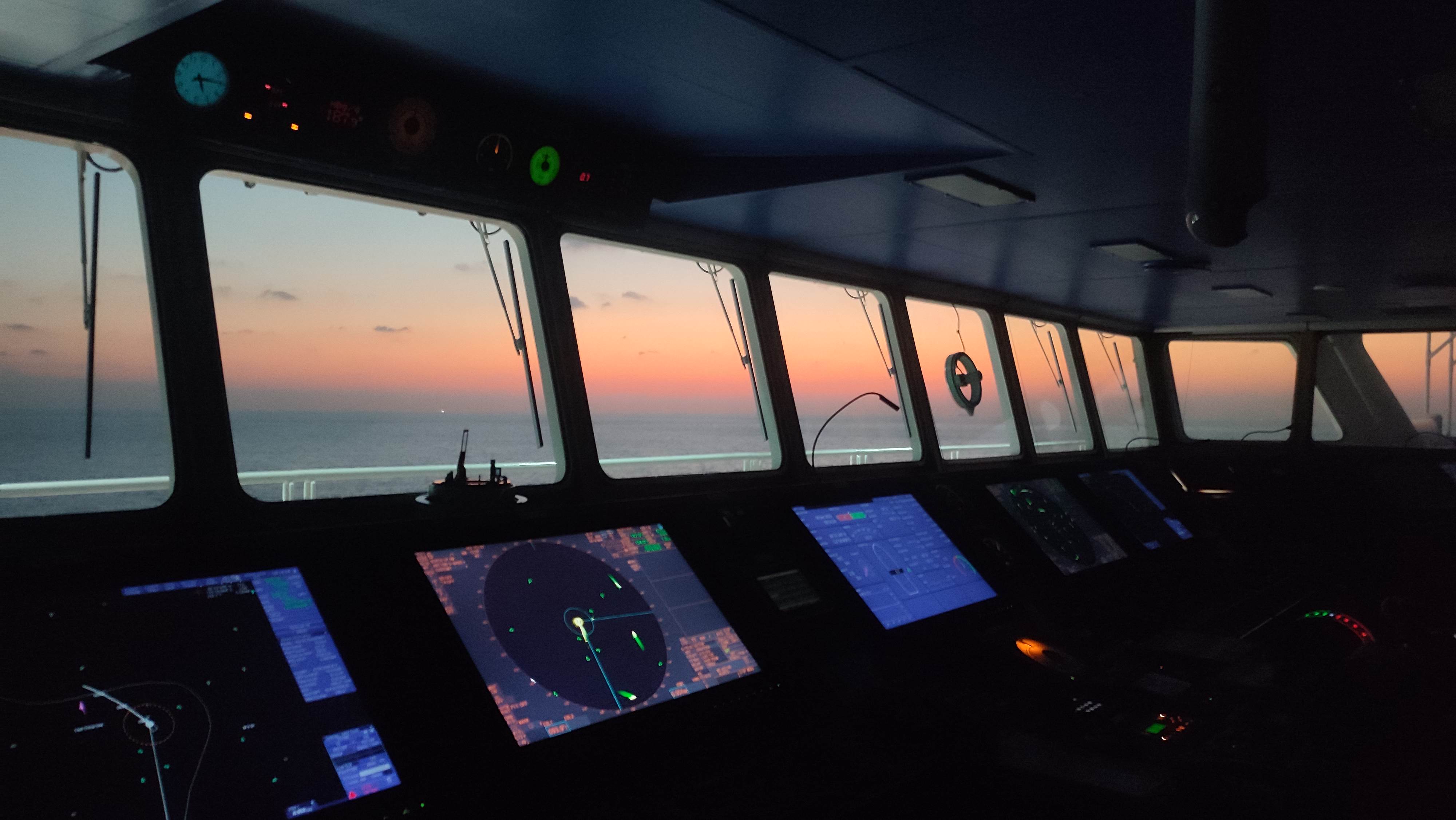
Practical maritime software grounded in operational experience across crude oil, chemicals, LNG, LPG, containers, and project loads. Active developments include LCS-Mar — a physics-based digital twin of oil/chemical tanker cargo systems modelling inert gas, piping hydraulics, cargo heating, crude-oil washing, and intact stability — alongside passage-planning automation and vessel performance tooling.
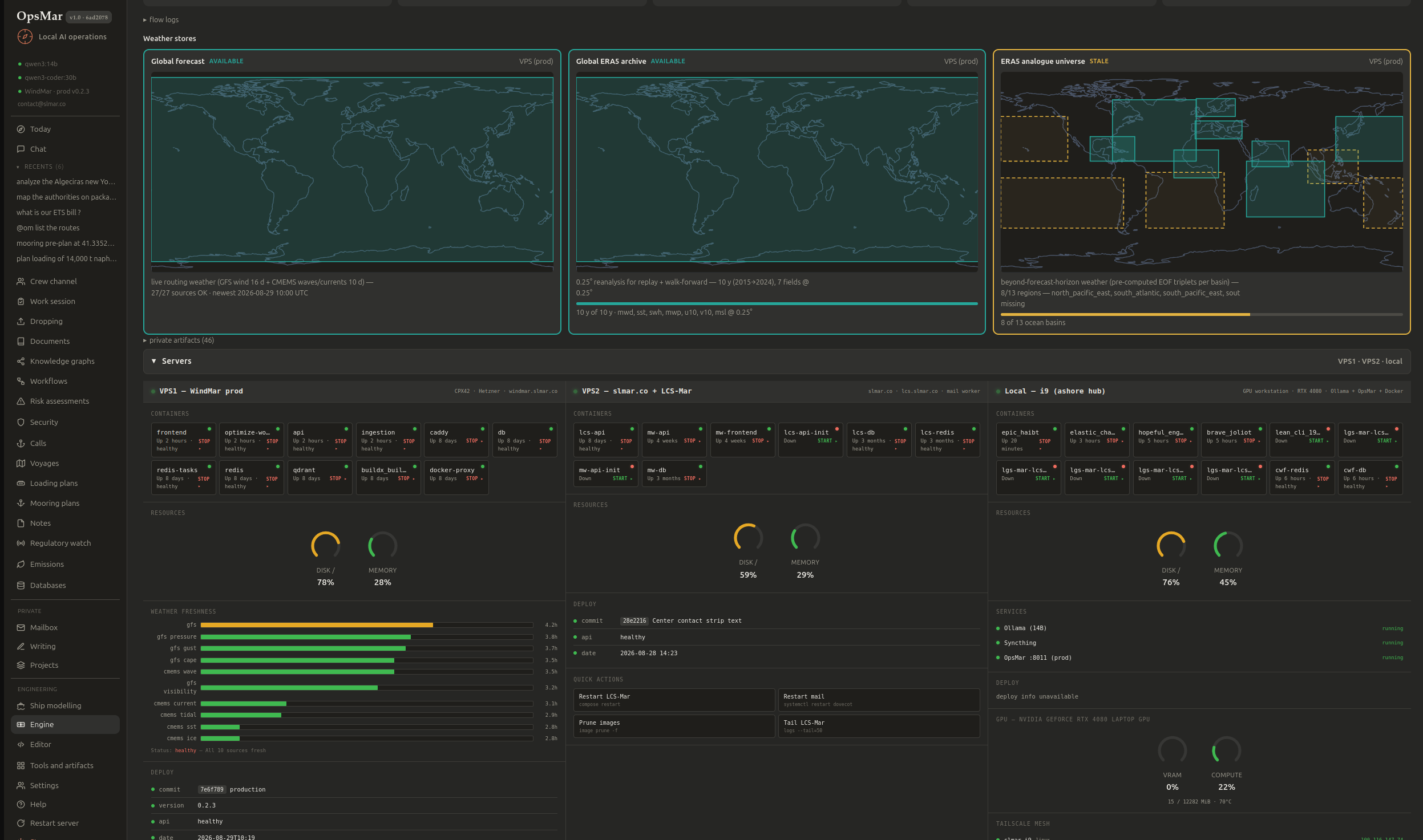
Applied research at the intersection of statistical physics, machine learning, and applied mathematics. Experimental work on quantitative data-challenge benchmarks (asset allocation forecasting, survival analysis) and self-hosted AI infrastructure. Published technical articles on quantitative research stacks and local model deployment.
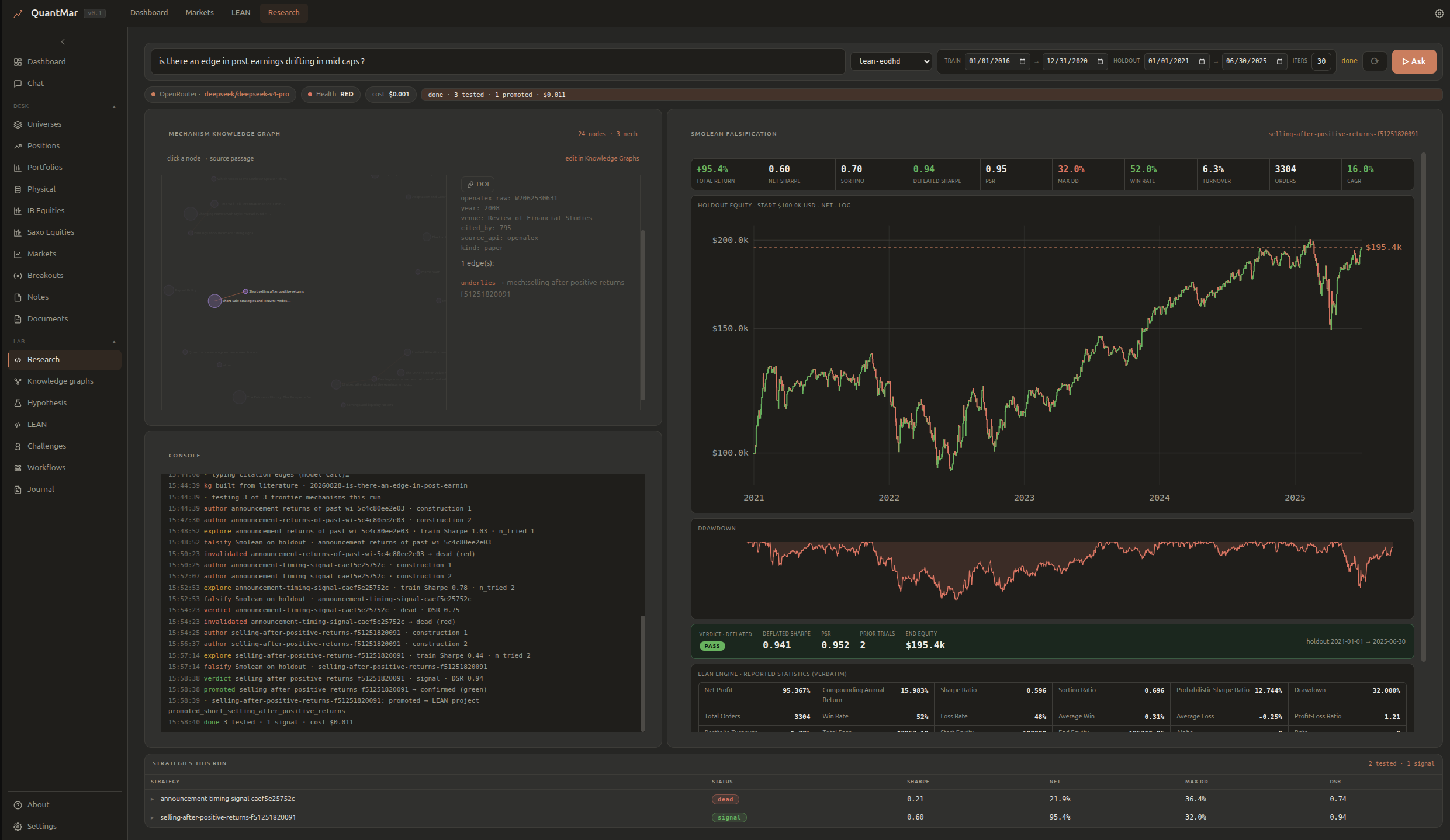
Research and engineering on quantitative trading systems, with a focus on automatic strategy generation, real-time monitoring dashboards, and trade automation. Published articles in InsiderFinance Wire, AI Advances, and Python in Plain English. Not investment advice; published content is research and engineering.
Grounded in physics. Designed for ship operations.
WindMar combines hydrodynamic modelling, meteorological data, and constrained pathfinding to model routes accounting for hull resistance, propulsion efficiency, and cargo loading under realistic ocean conditions. A reference implementation developed by a Master Mariner for research and education.