Beta testing
OpsMar is a ship-operations system for a single vessel, now in beta testing aboard. It runs at the edge, on one GPU workstation aboard (an RTX 4080-class machine), the model, the search and the documents all stay on the ship, nothing is sent to an external cloud. It answers over the ship's own corpus: manuals, SMS, noon reports, routes and calibration. I build it and use it in my own work as a master mariner. It is not sold as software, it stands here as evidence of the ship-operations and performance work I take on, on which I am open to consulting.
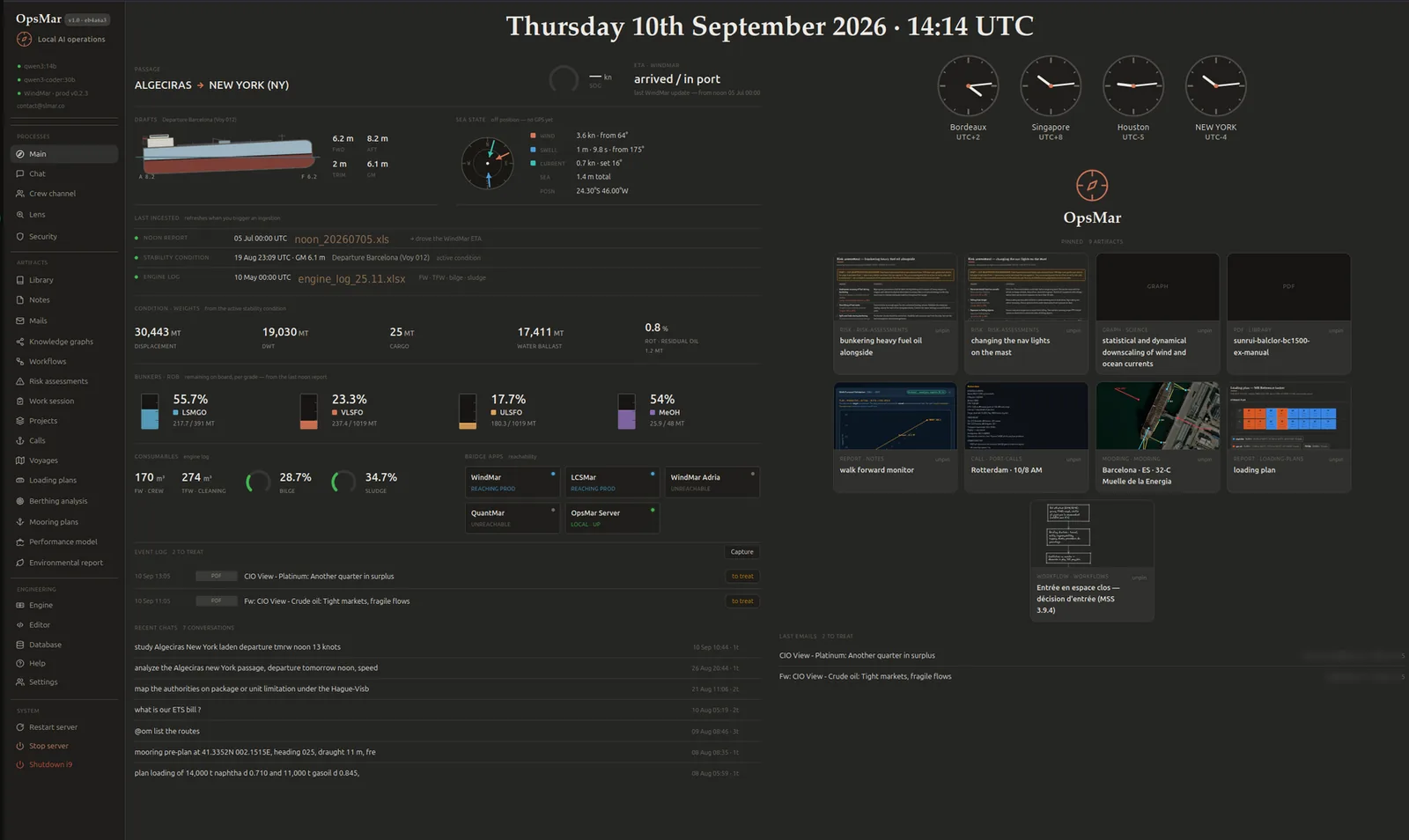
What it does
Developed on a real vessel's operational data. Three functions:
Plain-language queries over the ship's manuals, drawings, noon reports and history. Each answer carries a citation to the source document and page; when the corpus does not hold the answer, it says so rather than inventing one.
Voyage, fuel and performance figures come from the same ship-performance and routing engine used in WindMar, not from summarising a document. Figures are deterministic and traceable.
The corpus, calibration and surfaces are specific to a single ship. This per-vessel commissioning is the work a horizontal AI platform does not do.
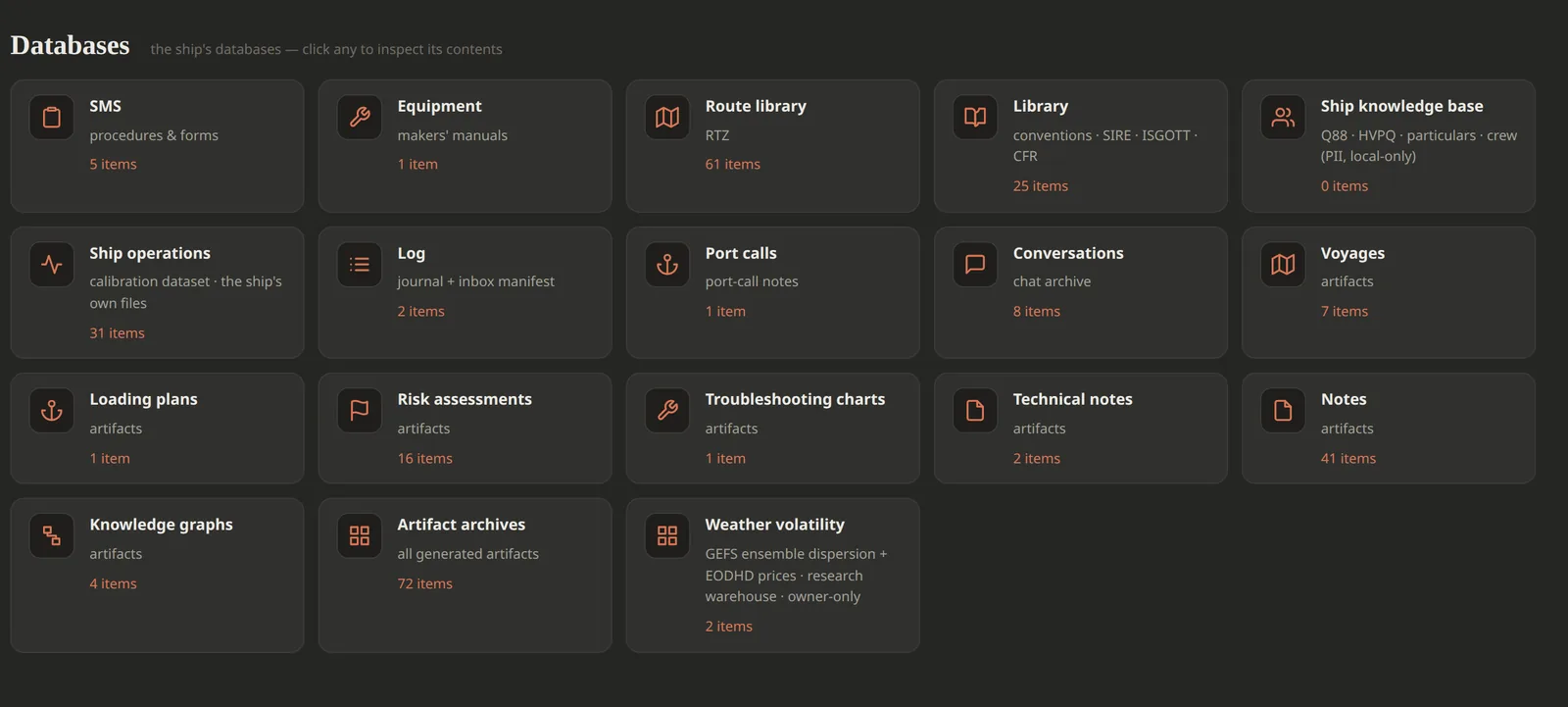
Agentic planning
One line, “study Algeciras to New York, laden, departure tomorrow noon, 13 knots”, and the assistant calls the routing tools itself: it builds the voyage from the route library, runs a baseline and a weather-optimised isochrone, and leaves a passage brief and a map in the Voyages track. The numbers come from the ship-performance engine, not from prose.
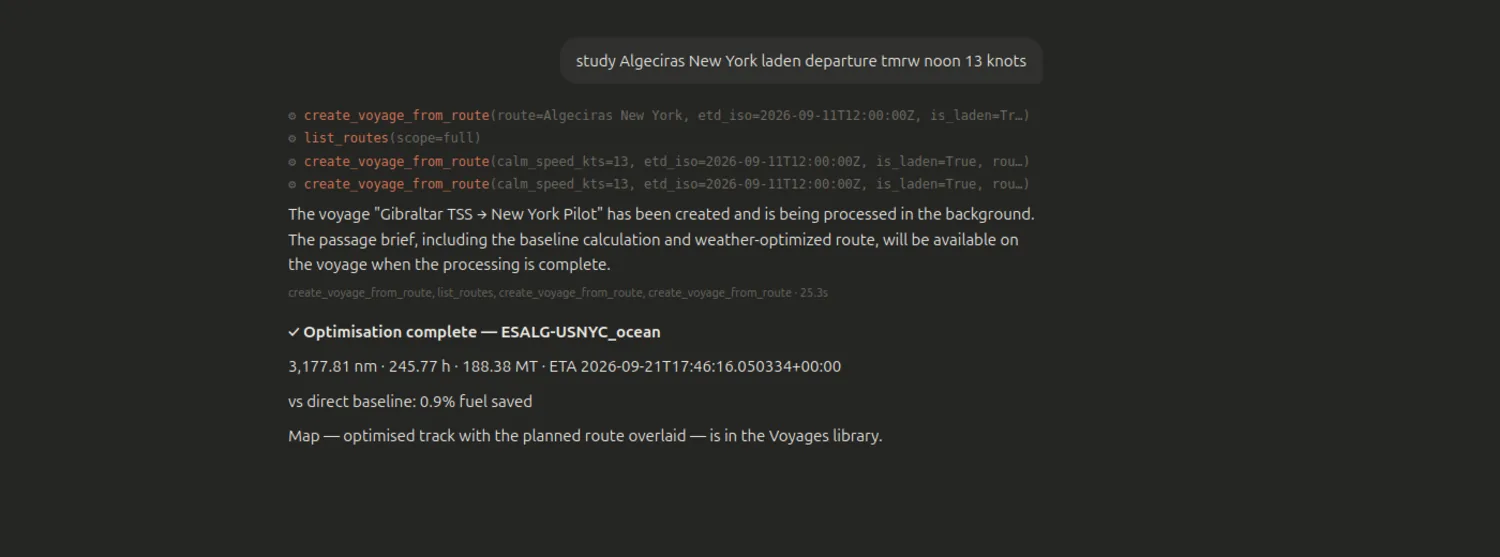
create_voyage_from_route / list_routes calls; the reply reports the optimised leg, distance, hours, fuel, ETA, and the saving versus the direct baseline.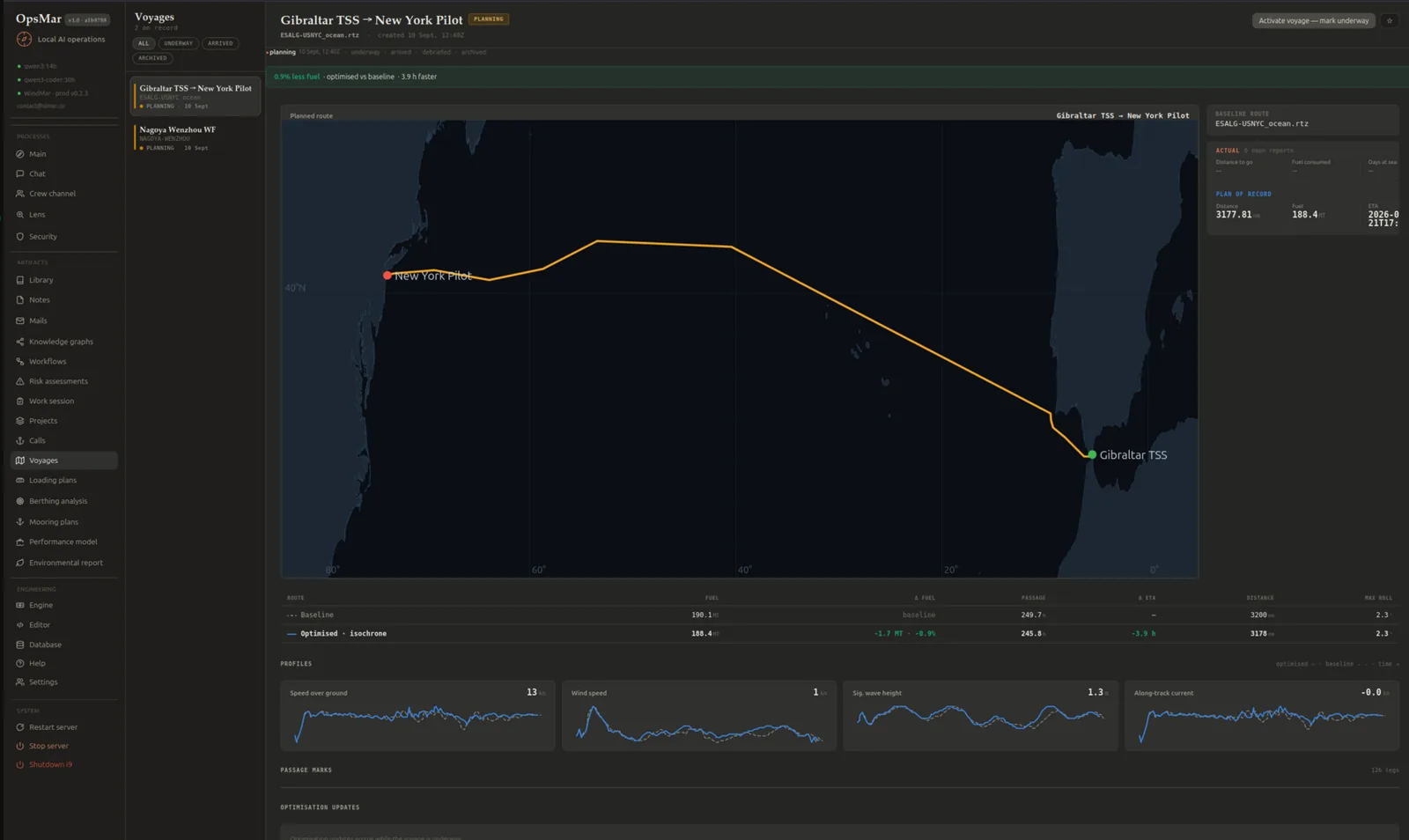
Ship model
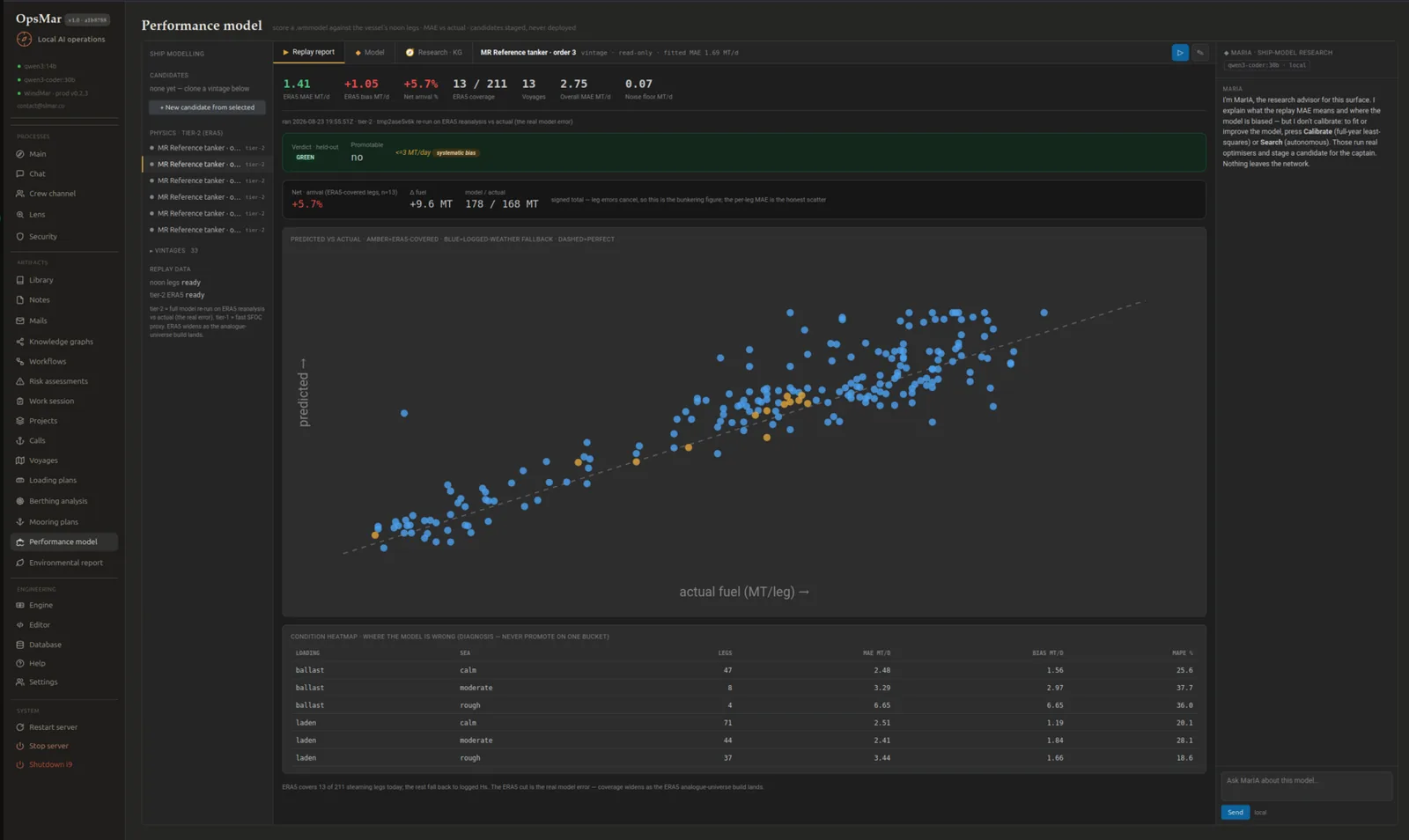
Every noon report the crew ingests is scored against the vessel's own performance model: predicted fuel versus what the ship actually burned, leg by leg. Where ERA5 reanalysis covers the track, the replay is the real model error; elsewhere it falls back to the logged weather. A candidate model is only ever staged, the officer promotes it, nothing auto-deploys, and nothing leaves the ship.
Knowledge graph
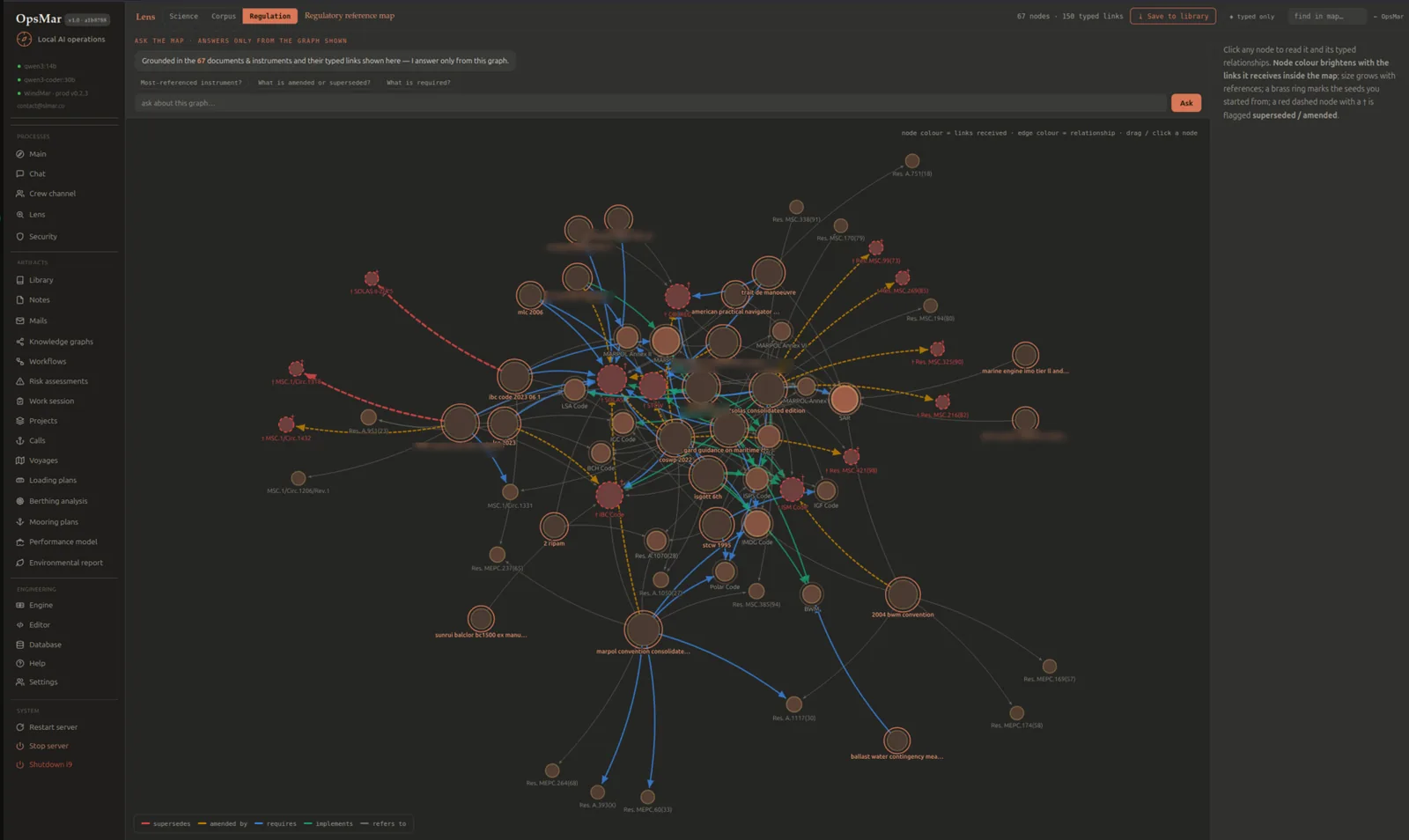
The conventions and the ship's own instruments are held as a typed graph, not a flat pile of PDFs: SOLAS, MARPOL, the ISM, IBC and IGF Codes, ISGOTT, STCW, the Polar Code and the IMO resolutions, linked by what they actually do to one another, requires, amended by, supersedes, implements, refers to. You can ask a question and be answered only from the graph shown, so every claim traces to a node.
CII · EU-ETS · FuelEU
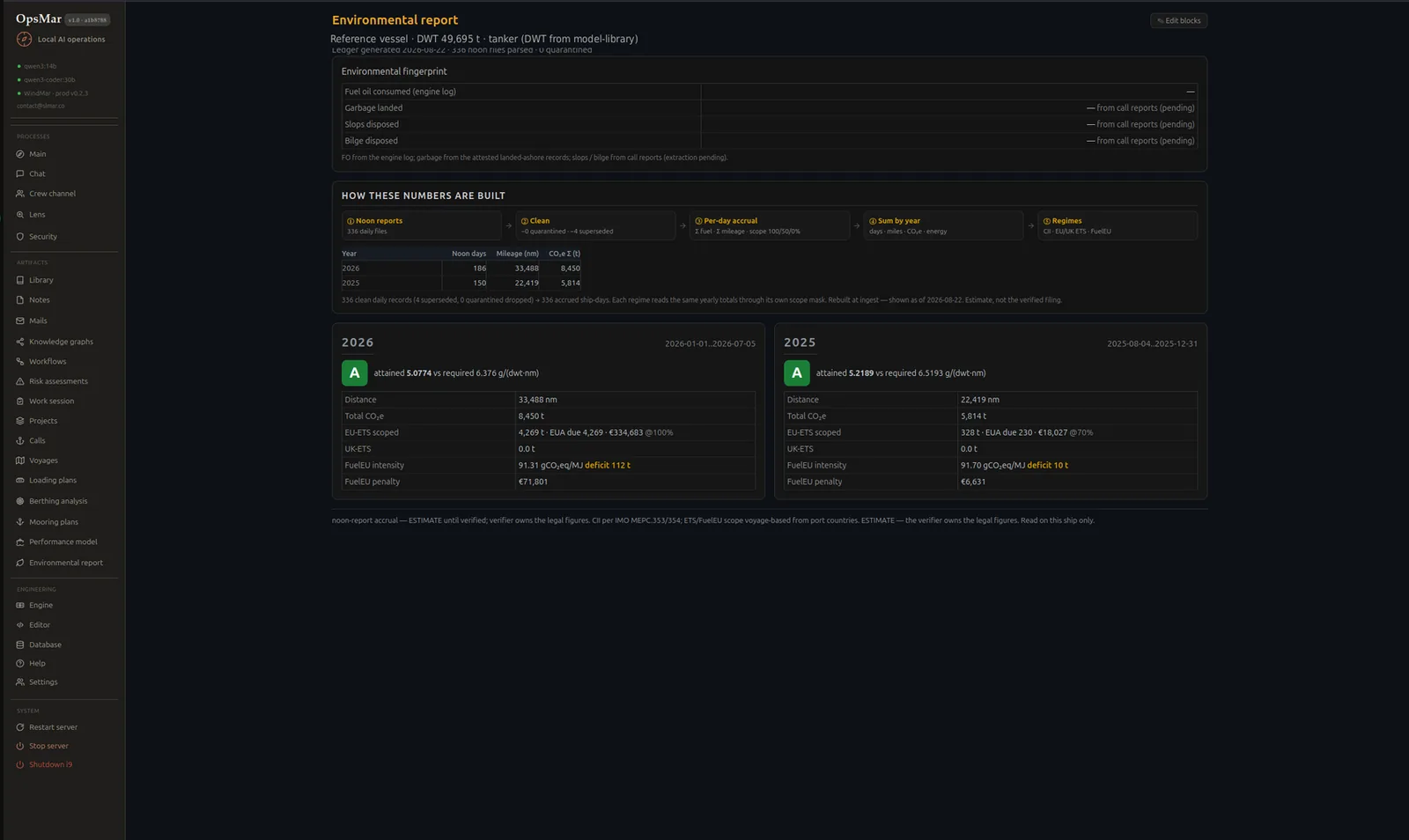
The same noon-report accrual that feeds the performance model rolls up into the regulatory carbon picture: a per-day CO₂e ledger built from the clean daily records, then read through each regime's own scope mask, CII rating against the IMO reference line, EU-ETS scoped tonnes and EUA cost, and the FuelEU intensity and penalty. Every figure is an estimate the ship can see early; the appointed verifier owns the legal filing.
Shared surface
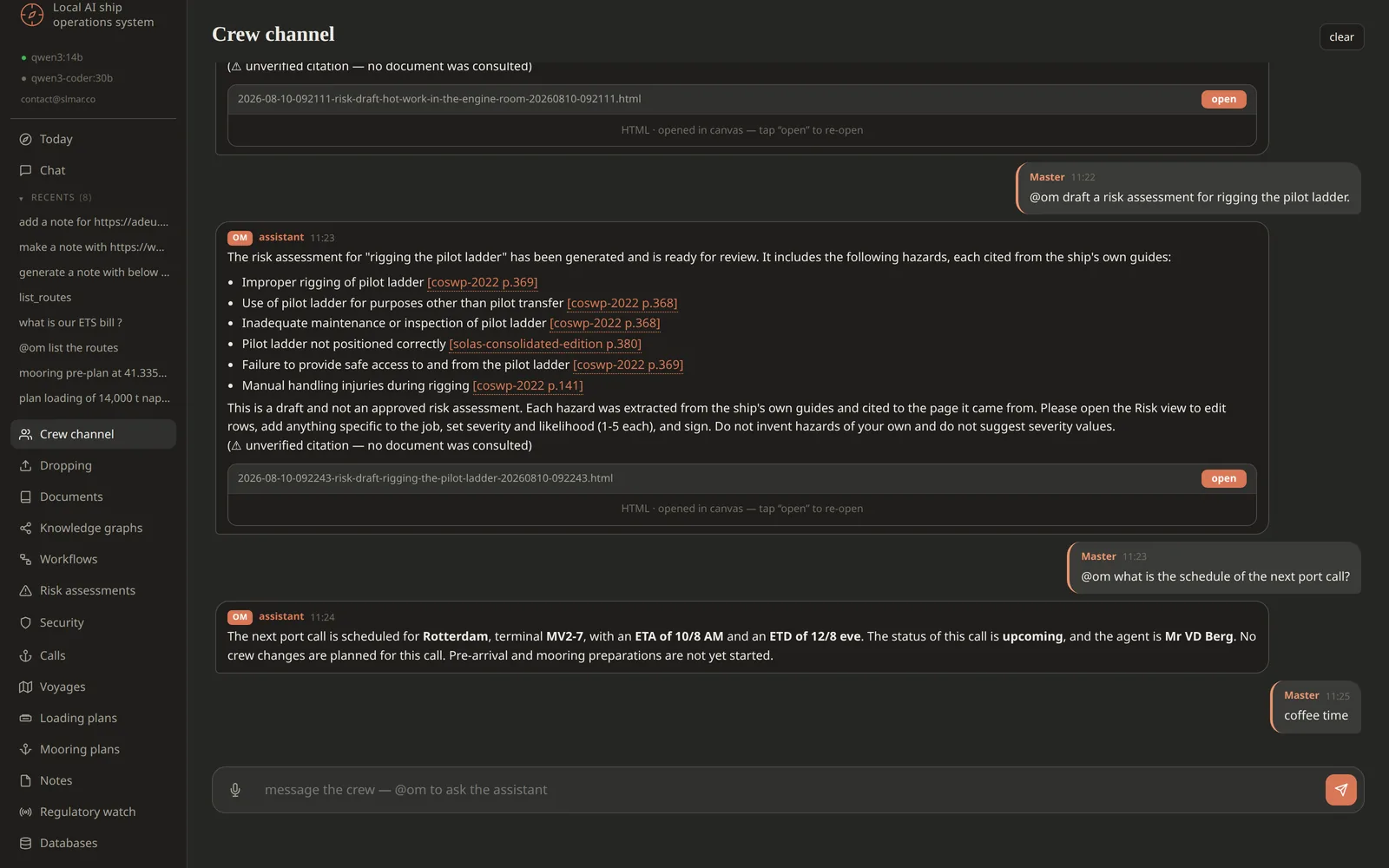
One shared channel. The crew talk to each other and, by naming OM, the ship's own local AI assistant, put a question to it; the answer is posted for everyone, cited to the ship's own guides, and always flagged as a draft for an officer to check. Only that mention calls the model; the rest is ordinary crew chat, and all of it stays on the ship.
Worked outputs
Examples of what OpsMar produces from the ship model. Figures below are from a reference (anonymised) vessel, not a named ship.
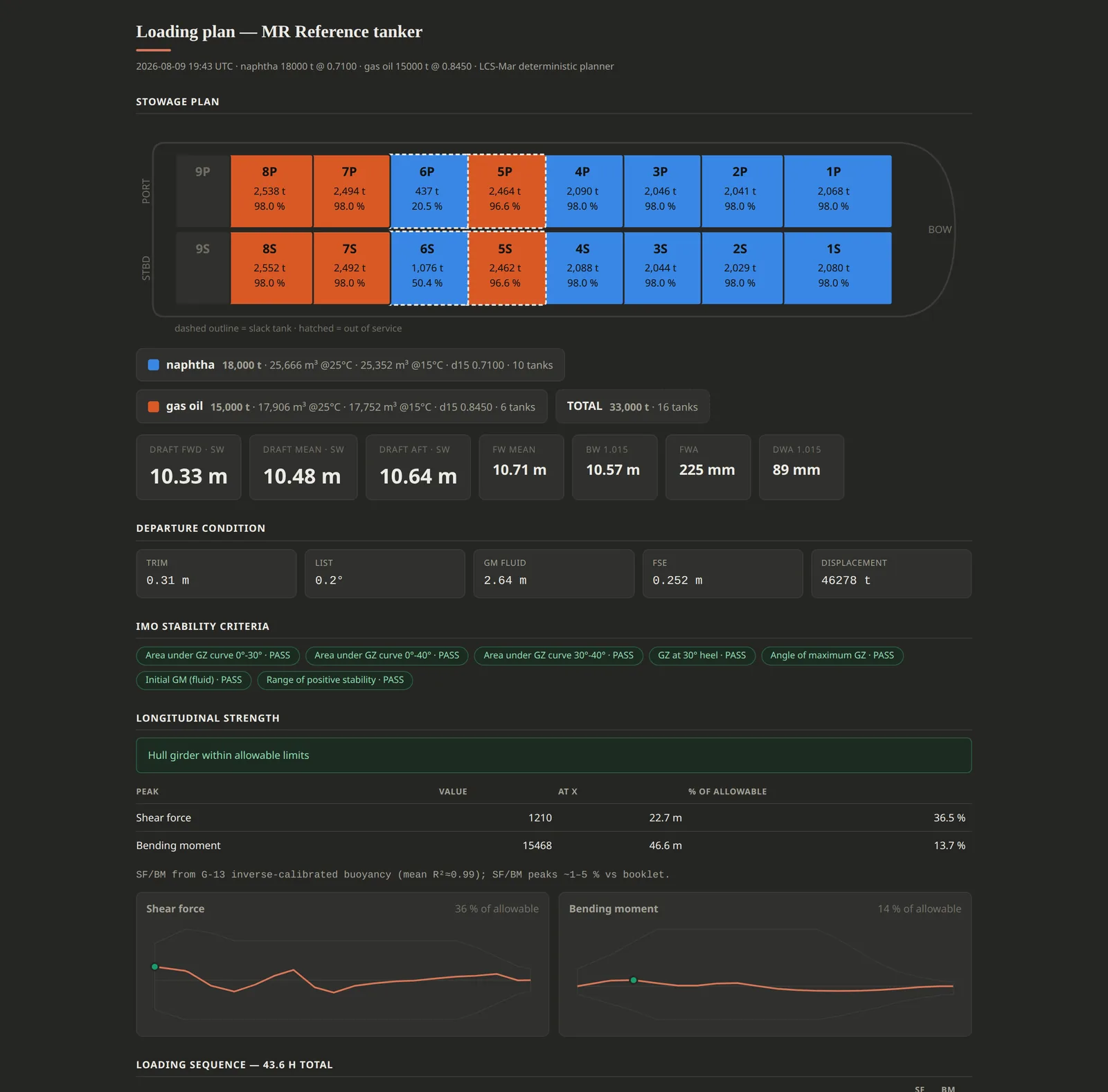
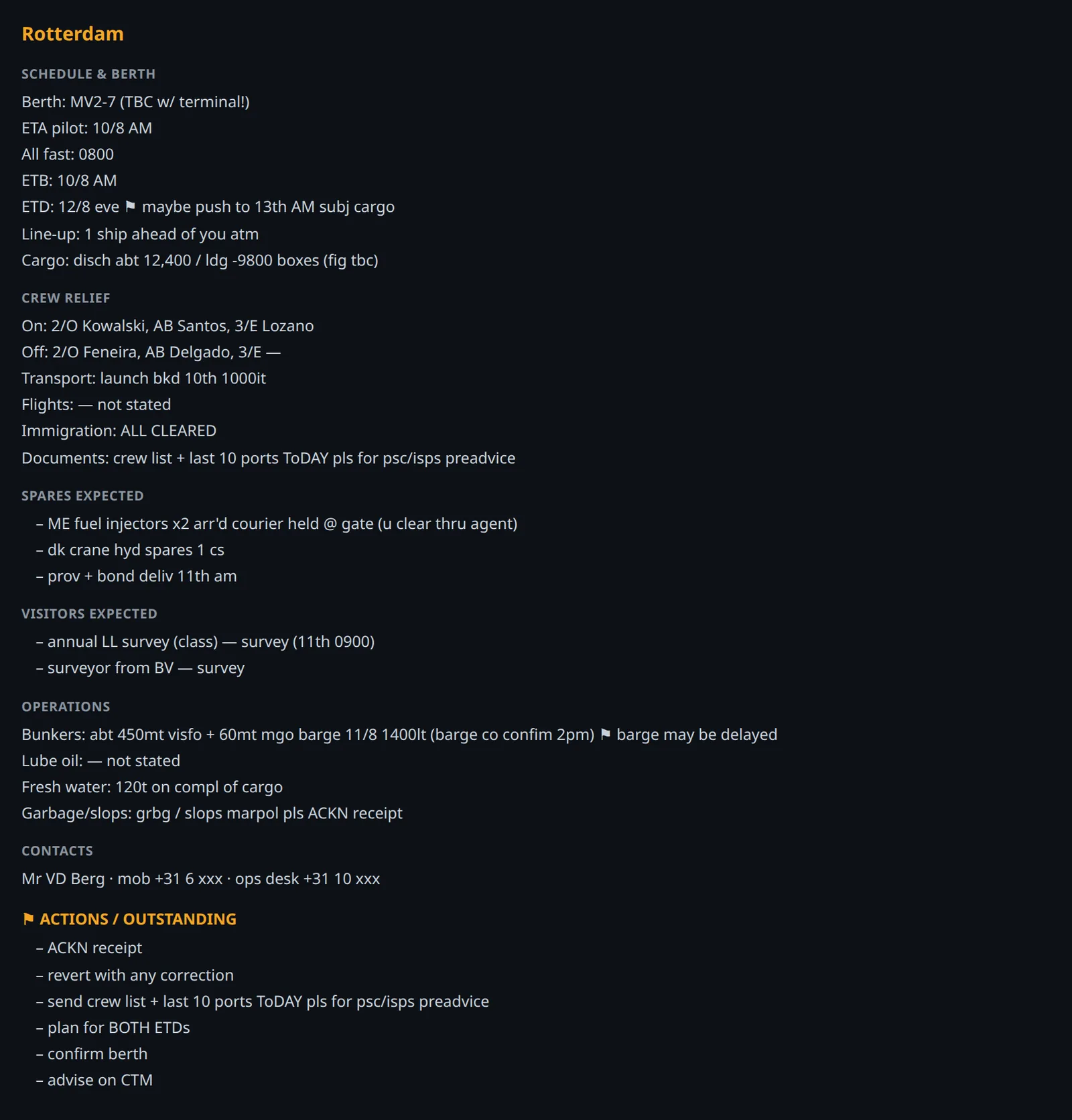
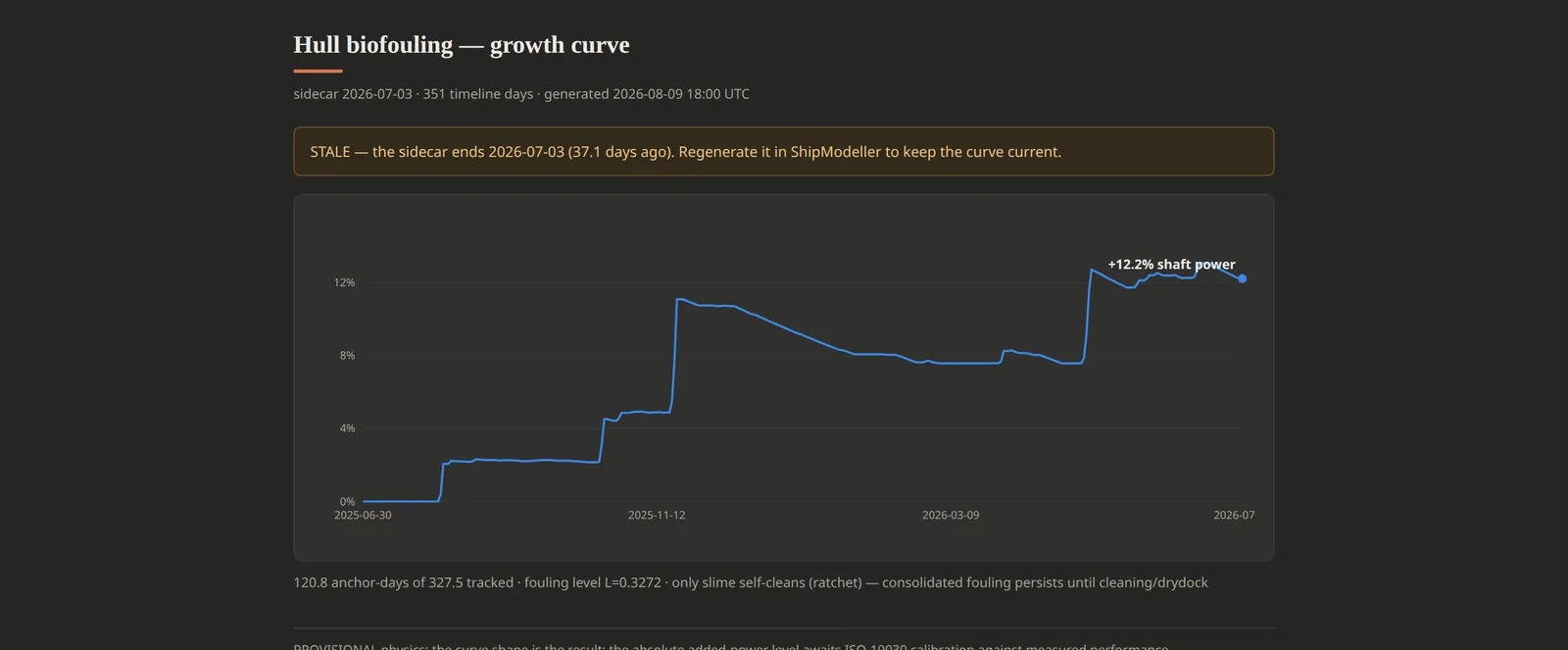
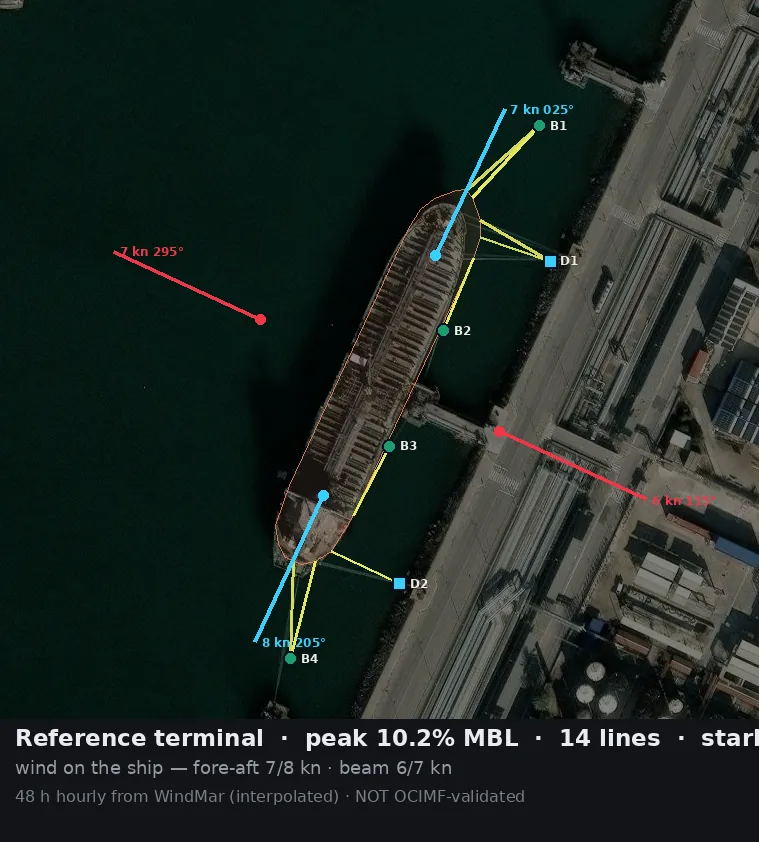
Engineering layer
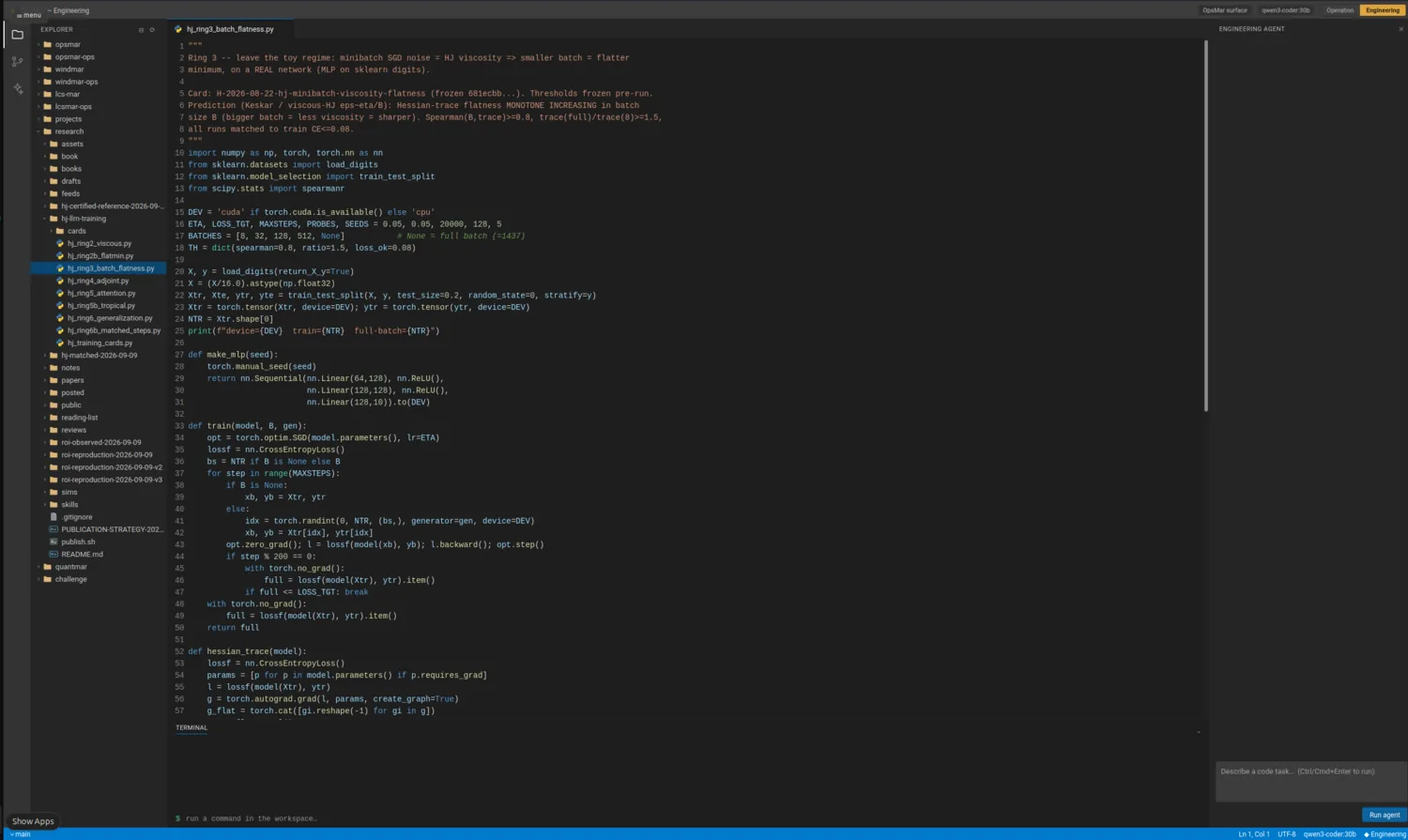
OpsMar is not a closed appliance. It carries its own engineering surface, an editor and a local coding agent (qwen3-coder, running on the same workstation), so the system can be extended and repaired at the edge, against the ship's own repositories, without a connection ashore.
Evidence
OpsMar is in beta. The routing and performance engine it uses is further along, with published figures:
Tell me the ship and the corpus you have: a 20-minute call, or a fixed-price scoping study to start.